European Football in a New Era: How the Game Is Evolving On and Off the Pitch
European football is entering a period of significant transformation. Established clubs are adapting to new financial realities, emerging teams are challenging familiar hierarchies, and younger generations of players are changing expectations about speed, technique and tactical flexibility. At the same time, supporters continue to fill stadiums, historic rivalries retain their emotional force, and international competitions bring different football cultures together. Following European football news offers a way to explore these developments, but the wider story is about how the sport is changing as an institution, an industry and an essential part of European cultural life.
The modern game is no longer shaped exclusively by what happens during ninety minutes. Decisions made in club offices, academy training centres, technology departments and national football associations increasingly influence the direction of competitions. Understanding these connections helps explain why European football looks different from the game that existed only a generation ago.
A Changing Competitive Landscape Across Europe
For decades, European football was associated with familiar domestic powers. Certain clubs regularly competed for national titles, while a relatively small group dominated the most prestigious international tournaments. Financial resources, established reputations and access to leading players helped maintain these patterns.
That structure has not disappeared, but it has become more complicated. Ambitious clubs are investing in recruitment, coaching and infrastructure, while teams with carefully developed sporting strategies are finding ways to compete against wealthier opponents. Promotion and relegation also continue to create movement throughout national football systems, allowing clubs from lower divisions to reach the highest level.
UEFA’s European Club Talent and Competition Landscape report for the 2025/26 season illustrates this changing environment. According to its findings, 36 of Europe’s 55 men’s domestic top divisions crowned different champions from the previous season. Six clubs won their national league for the first time. These results demonstrate that established hierarchies can be challenged, even in competitions with long histories of dominance.
This competitive movement matters because football’s appeal depends partly on uncertainty. Supporters want to believe that intelligent management, strong teamwork and outstanding performances can overcome financial disadvantages. When new clubs emerge as serious contenders, domestic competitions gain fresh narratives and attract attention beyond their traditional audiences.
The New Economics of the Transfer Market
The transfer market has become one of the most visible expressions of modern football’s financial growth. Major clubs compete for established international stars, promising teenagers and players whose tactical qualities fit increasingly specialised systems. Recruitment is now a long-term process involving scouting networks, performance analysis, medical assessment and financial planning.
The scale of this market is remarkable. UEFA reported that European men’s clubs’ transfer spending exceeded €10 billion during the summer 2026 window, an increase of 8% compared with the previous year. Investment in teenage players reached a record €1.2 billion, while footballers aged 23 or younger accounted for 56% of total transfer spending. These figures reveal how strongly clubs are competing for talent that can contribute immediately while offering potential long-term value.
However, expensive recruitment does not automatically produce success. A club can assemble a squad of internationally recognised players and still struggle to establish tactical balance. New arrivals need time to understand their teammates, adapt to the coach’s philosophy and become familiar with the demands of a different competition.
Financial sustainability is another increasingly important consideration. Transfer fees, salaries, agent commissions and infrastructure costs must be balanced against revenue. UEFA’s financial sustainability framework focuses on solvency, stability and cost control, reflecting the importance of protecting clubs from spending patterns that threaten their long-term position.
The strongest organisations increasingly recognise that sporting ambition and responsible management must work together. A successful transfer strategy is not simply about spending more than competitors. It is about identifying the right players, building a coherent squad and making decisions that remain viable beyond a single season.
Youth Academies Are Shaping the Future
The development of young players has become a central element of European football strategy. While international stars continue to attract global audiences, academies provide the foundations on which clubs and national teams can build their future.
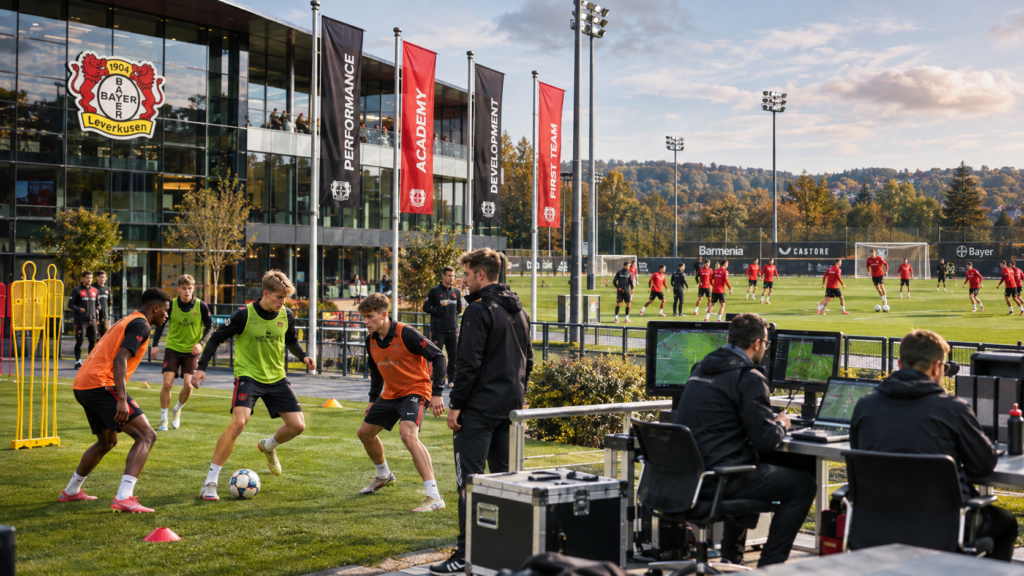
Modern youth development involves considerably more than teaching technical skills. Players receive instruction in positioning, decision-making, physical preparation and tactical awareness. Many programmes also place greater emphasis on psychological development, helping young athletes manage pressure, competition for places and the expectations associated with professional football.
The transition into senior football remains one of the most difficult stages of a player’s career. A teenager may dominate at academy level but discover that professional matches demand quicker decisions, stronger physical preparation and greater consistency. Clubs therefore need to create opportunities for gradual progression rather than relying on young players only when injuries leave them with limited alternatives.
The importance of locally developed talent remains clear even as recruitment becomes increasingly international. UEFA’s 2025/26 analysis found that locally trained players accounted for approximately 47% of domestic league minutes across the 20 men’s competitions examined. This suggests that international recruitment and local development are not necessarily competing approaches. Successful clubs can combine both, using academy graduates to strengthen their identity and carefully selected external signings to address specific sporting needs.
For smaller clubs, youth development can also be an important source of financial stability. Producing talented players creates opportunities for sporting success and, in some cases, significant transfer income. The challenge is to ensure that commercial benefits do not come at the expense of a genuine commitment to education, player welfare and long-term development.
Technology Is Changing the Experience of Football
Technology has become an integral part of professional football, influencing how teams prepare, how referees make decisions and how supporters understand matches.
Performance analysis allows coaching departments to examine details that are difficult to assess through observation alone. Tracking systems can help measure player movement, physical workload and positional behaviour. Video analysis allows teams to study opponents, identify recurring patterns and review their own performances in detail.
These tools have changed the relationship between coaches and information. A manager can examine how effectively a team maintains its defensive shape, how frequently it creates opportunities in certain areas or how players respond to specific pressing situations. Data provides additional evidence, although interpreting it still requires experience and an understanding of the match itself.
Refereeing technology has also become an important subject of discussion. The Video Assistant Referee system was introduced to help officials review certain decisive incidents, but its use has generated continuing debate about consistency, delays and the interpretation of complex situations.
In August 2026, UEFA introduced Clear Line, a reference platform containing more than 150 refereeing scenarios and guidance on the application of the Laws of the Game and VAR interventions. The initiative is intended to improve consistency and transparency across domestic and European competitions.
The wider challenge is to ensure that technology supports football without overwhelming its natural rhythm. Supporters value accuracy, but they also want to experience the spontaneity and emotional intensity that make the sport distinctive.
Women’s Football Is Building a Stronger Future
The development of women’s football is among the most significant changes in the European sporting landscape. Greater visibility, growing attendance and improvements in professional structures have helped expand the game’s reach. More clubs are investing in women’s teams, while national associations are working to improve coaching standards and create clearer development pathways.
This progress has consequences beyond the professional level. Stronger competitions can encourage more girls to participate, improve access to coaching and create new opportunities for women working in different areas of the sport. Better training environments and more consistent investment also help clubs retain talented players who might previously have faced limited career prospects.
UEFA’s analysis of the 2025/26 season recorded approximately 5.1 million spectators at women’s club football matches. The organisation has also announced measures to strengthen coaching education and expand pathways towards the highest professional qualifications. These developments indicate that the growth of the women’s game increasingly depends on building sustainable sporting structures rather than relying on occasional surges of public attention.
There is still considerable variation between competitions. Some leagues have developed stronger professional foundations, while others need further investment in facilities, salaries, youth programmes and media coverage. Continued progress will depend on whether the sport can turn rising interest into lasting institutional support.
Stadiums, Supporters and the Traditions That Keep Football Alive
Despite the growing influence of digital media, the stadium remains one of the most powerful symbols of European football. It is a place where local history, sporting identity and collective emotion come together. For many supporters, attending a match is not simply a form of entertainment but a tradition connected to family memories and community belonging.
Historic grounds often carry stories that extend far beyond their architecture. Generations of fans have experienced victories, disappointments, promotions and relegations in the same stands. The colours of a club, familiar chants and traditional rivalries can become part of a city’s identity, passed from parents to children and preserved through everyday supporter culture.
The continued popularity of live football is particularly revealing in an age when almost every major competition is available through television or digital platforms. UEFA reported that at least 242 million people attended men’s club and national-team matches across Europe during the 2025/26 season, setting a new record. Domestic top-tier leagues attracted approximately 116 million spectators, while lower-league matches brought in another 82 million.
These figures demonstrate that digital access has not replaced the appeal of being present at a match. The atmosphere of a derby, the anticipation before kick-off and the shared reaction to an unexpected goal remain difficult to reproduce elsewhere.
Football’s cultural importance is also visible outside professional stadiums. Amateur clubs, school competitions and neighbourhood teams introduce people to the game and create social connections that often last for decades. UEFA’s grassroots programmes recognise the importance of making football accessible across different ages, abilities and backgrounds.
Grassroots Football and the Importance of Local Development
The future of European football depends on more than elite competitions. Local clubs and amateur organisations provide the foundation for participation, coaching experience and community involvement. They give children their first opportunity to play, offer adults a way to remain active and create environments where the values of teamwork and fair play can be experienced directly.
Grassroots development also helps address inequalities in access to sport. Facilities, qualified coaches and safe playing environments are not equally available everywhere. Investment in local infrastructure can therefore have an impact that extends beyond football, supporting physical activity, social inclusion and stronger community relationships.
The connection between grassroots and professional football is particularly important. Today’s academy prospect may begin in a small local club, where volunteer coaches introduce basic skills and encourage a lasting interest in the game. A healthy football system recognises the contribution of these organisations instead of concentrating all attention and resources at the elite level.
What Comes Next for European Football?
The next stage of European football will be shaped by how successfully the sport balances its competing priorities. Clubs must remain ambitious while protecting their financial foundations. Competitions need to maintain their appeal without placing excessive demands on players. Technology should improve decision-making, while the human qualities of the game must remain central to the experience.
There will also be continuing questions about competitive balance. Financial differences between clubs are unlikely to disappear, but well-managed organisations, effective academies and opportunities for emerging teams can help maintain a degree of unpredictability. The development of women’s competitions and grassroots programmes will be equally important in determining how broad and inclusive the football community becomes.
For supporters, these changes create new reasons to follow the game. A transfer story may reveal a club’s long-term strategy, a youth tournament can introduce the next generation of stars, and an apparently ordinary league match may become a turning point in a team’s history.
European football remains powerful because it brings together different worlds. It is a professional industry shaped by global investment, a tactical contest driven by innovation, and a cultural tradition rooted in local communities. Its future will not be determined by one competition, one club or one generation of players. It will emerge from the continuing relationship between sporting ambition, responsible development and the millions of people who give the game its meaning.