Writing an Art Response Beyond First Impressions
Write a thoughtful art response by describing visible details, separating observation from interpretation and supporting your reaction with specific examples.
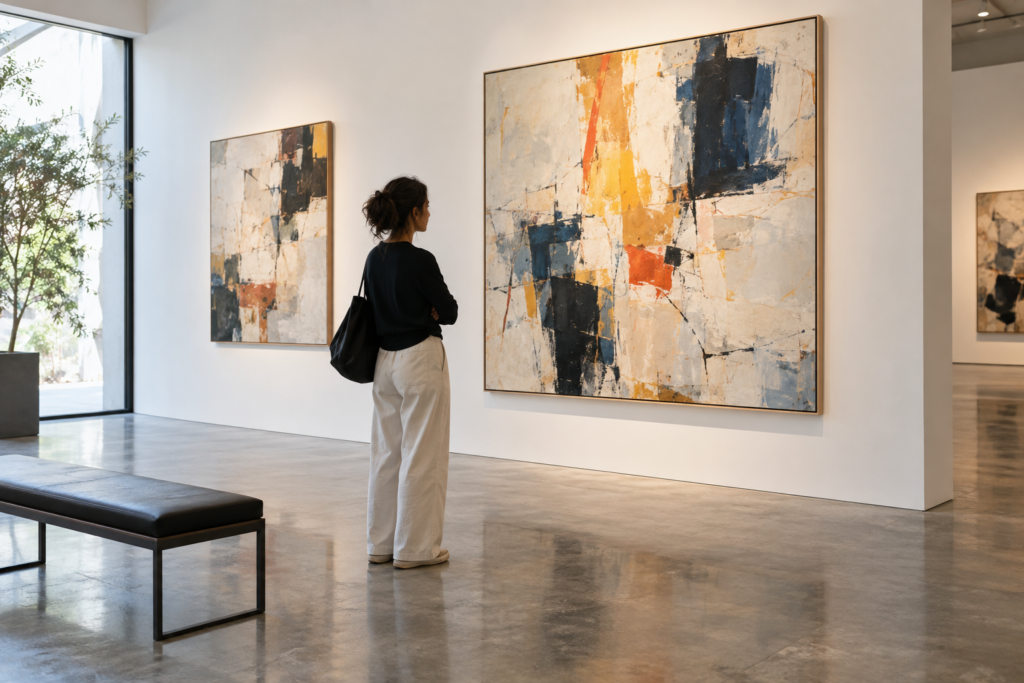
A first response to an artwork may be immediate: a color catches the eye, a shape feels familiar or the whole piece seems difficult to understand. Writing about that response becomes more useful when the reaction is connected to particular details. A reader should be able to follow how the impression developed.
Begin with close observation
Spend time looking before reading every accompanying explanation. Notice the scale, materials, arrangement and relationship between different parts. Describe what is visible in plain language. A statement about a dark background or repeated line gives the reader a firmer starting point than a general claim that the work is powerful.
Consider how your viewing position affects what you notice. A small detail may disappear from across the room, while a larger arrangement becomes clearer at a distance. If the work includes sound, movement or several components, describe the part of the experience you actually encountered. Do not imply that a brief visit revealed everything.
Add context with clear attribution
Read the title, label or artist’s statement and note what new information it provides. Keep the artist’s explanation separate from your own interpretation. If a curator proposes a particular connection, attribute it rather than presenting it as something the artwork visibly proves. Context can enrich a response without replacing observation.
Avoid assigning a personal history or intention to the artist without a source. An object may remind you of a familiar experience, but that association belongs to your response. Describe it as such. Different viewers can bring different memories to the same work without one reaction becoming a universal account.
Support a judgment with examples
If you find the work engaging, explain which choices held your attention. If it feels confusing or unconvincing, identify the point where your response changed. A useful critique can be specific and candid without becoming a judgment about the artist’s character. Focus on the work and the experience it created.
Use quotations sparingly and accurately when they help explain the context. Keep any photographs consistent with the venue’s rules and the relevant permissions. A photograph of a work should not be assumed to reproduce the full encounter, especially when scale, surface or movement contributes to the experience.
Revise the draft by asking whether each interpretation has an observable detail behind it. Remove statements that merely repeat an adjective in different words. Keep an unanswered question if it reflects something the work made you consider. A response does not need to settle every ambiguity to become thoughtful.
The strongest art writing often combines attention with a clear sense of perspective. It tells readers what the writer noticed, what context mattered and why the encounter stayed with them. That gives the audience a conversation they can enter rather than a verdict they must accept.