Testing a Prototype With a Clear Question
Plan a useful prototype session by choosing one question, observing how participants respond and recording the limits of what the test can show.
A prototype can help a team explore an idea before committing to a finished design. Its value comes from the question it allows people to investigate. A model that looks impressive may still produce little useful information if nobody has decided what the session is meant to reveal.
Choose one question to explore
Write down the practical question before arranging the session. You might want to know whether a participant understands a sequence, can find a control or notices a particular detail. Keep the question narrow enough to observe. Asking whether people like the whole idea often produces answers that are difficult to turn into a specific change.
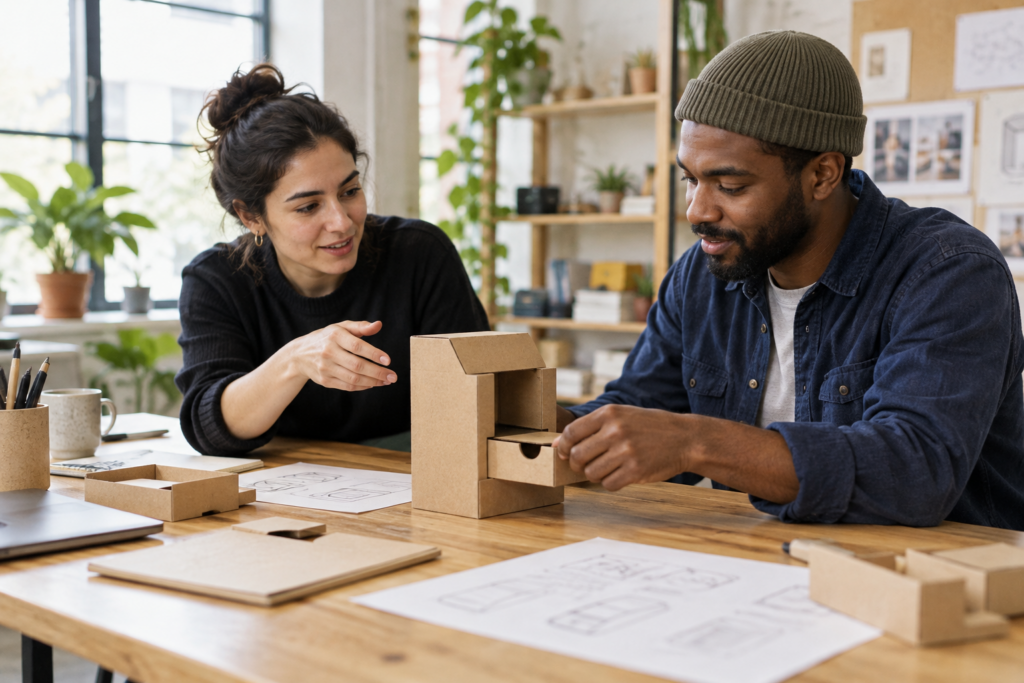
Explain what the prototype represents and where it is incomplete. A paper or cardboard model can show an arrangement without demonstrating durability or final performance. Participants should not mistake a rough demonstration for a finished product. Record these limits so that later discussion does not give the prototype more authority than it deserves.
Observe before explaining
Give a participant a short task in ordinary language. Avoid teaching the intended solution immediately, because that may hide the point where the design becomes confusing. Watch what they try, where they pause and what they ask. If they need assistance, note when and how the assistance was given.
Ask follow-up questions about the experience rather than defending the design. What did they expect to happen? Which part was unclear? Separate their comments from your interpretation in the notes. One person may solve a task differently from the designer without being wrong; that difference can reveal an assumption worth examining.
Record the conditions and limits
Document the version tested, the task, the setting and any changes made during the session. A result is easier to interpret when the team knows which prototype produced it. Do not combine notes from several versions as if they came from one consistent test. Keep a simple version label on the model and the record.
Treat a small session as evidence about those observed situations. It does not automatically establish how every user would behave. Describe what happened and which questions remain open. If participants were selected for a particular reason, include that context rather than implying the group represents an entire population.
Choose the next revision according to the observations. Change one relevant feature where possible and explain why it changed. A later session can then investigate whether the revision addressed the original difficulty. Keep unsuccessful attempts in the record, because they can prevent the team from repeating the same assumption.
A useful prototype session ends with a clearer question or a justified next step. It does not need to produce a dramatic success story. Careful observation, understandable records and modest conclusions can make even a simple model contribute meaningfully to design work.